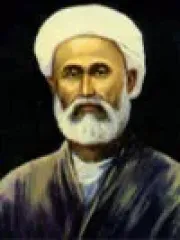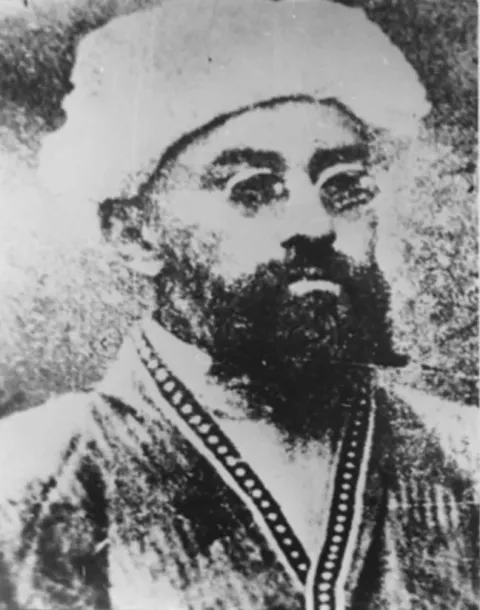
Mahmudkhoja Behbudiy
Samarkand educator and leader of the Jadid reform movement in Turkestan, publisher and playwright, author of “Padarkush” (“The Patricide”), regarded as the first Uzbek drama.
- Occupation:
- Writer, Politician, Religious figure, Educator, Playwright, Publicist
- Born:
- January 19 1875(44 years old) ♑ — March 25, 1919
- Birthplace:
- Samarkand
- Father:
- Behbudxo'ja
Biography
Mahmudkhoja Behbudiy was born on 19 January 1875 in the village of Bakhshitepa near Samarkand, the son of Behbudkhoja, son of Solihkhoja, an imam and preacher. His uncle Muhammad Siddiq taught him to read, he learned the Qur’an by heart under his father, and from the age of fifteen he studied Arabic, logic and Islamic law with another uncle, the mufti Mulla Odil. He attended madrasas in Samarkand and Bukhara, but after his mother died in 1893 and his father in 1894 he had to give up his studies and earn a living.
He first worked as a clerk (mirza) at his uncle’s qadi court and then rose to the rank of mufti, a post he held until 1916. In 1899–1900 he made the pilgrimage to Mecca; on the way he stopped in Istanbul and Cairo, looked at old and new schools there, al-Azhar among them, and brought home newspapers and books. Afterwards he became a regular reader of Ismail Gasprinski’s newspaper “Tercüman” and later wrote for it.
In 1903, at his initiative, his pupils Abduqodir Shakuriy and Siddiqiy Ajziy opened the first new-method (Jadid) schools in the villages of Rajabamin and Halvoyi outside Samarkand. Behbudiy wrote textbooks for them, among them “Risolai asbobi savod” (1904), “Risolai jug'rofiyai umroniy” (1905), “Kitob ul-atfol” (1908), “Amaliyoti islom” (1908) and “Tarixi islom” (1909). In the 1900s he travelled to Moscow, St Petersburg, Kazan and Ufa, and in 1908 he opened the Behbudiya reading room and library in Samarkand.
In 1911 he wrote the play “Padarkush” (“The Patricide”): Toshmurod, a rich man’s son left without schooling, falls into bad company and ends up an accomplice in the murder of his own father. It came out as a book in 1913 with the approval of the censor in Tiflis, was staged in Samarkand on 15 January 1914 and in Tashkent on 27 February by Abdulla Avloniy’s “Turon” troupe. The history of Uzbek drama and of the national theatre is usually counted from these performances.
In April 1913 Behbudiy began to publish the newspaper “Samarqand” in Uzbek and Tajik (45 issues had appeared by September), and in August he founded the weekly magazine “Oyina” (“The Mirror”), which ran until 1915. In its first issue he published the article “Not Two, but Four Languages Are Needed”, arguing that an educated person must know Turkic, Persian, Arabic and Russian. Altogether he published more than two hundred articles in newspapers and magazines. In 1914 he travelled again to the Middle East and Turkey.
After the February Revolution of 1917 he entered politics: he spoke at the congresses of Turkestan’s Muslims and was elected to the Samarkand city duma and to the All-Russian Constituent Assembly. In November 1917 he took part in the congress in Kokand that proclaimed the Turkestan Autonomy and joined its National Assembly; the Bolsheviks crushed the autonomy in February 1918.
Early in 1919 Behbudiy was seized in Shahrisabz, on the territory of the Emirate of Bukhara, and on 25 March he was executed in Qarshi on the orders of the emirate’s officials; where he was buried is unknown. From 1926 to 1937 the city of Qarshi bore the name Behbudi, and from 1937 his name was banned. In independent Uzbekistan his writings have been republished; in 2020 he was posthumously awarded the Order “For Outstanding Merit”, in 2021 a house museum opened in Samarkand, and in 2025 the 150th anniversary of his birth was marked by a presidential decree.
Career
- Samarqand newspaperFounder and editor · Samarkand · 1913–1913
- Oyina magazineFounder and editor · Samarkand · 1913–1915
- All-Russian Constituent AssemblyElected member · 1917–1918
- Turkestan AutonomyMember of the National Assembly · Kokand · 1917–1918
Awards
 Order «For Outstanding Merit»2020, posthumously · Uzbekistan
Life path
- 1890sMadrasa studies
Studied at madrasas in Samarkand and Bukhara; gave up his studies after his parents died.
- 1894–1916Clerk, then mufti
Worked as a clerk at his uncle’s qadi court, then became a mufti.
- 1899–1900Pilgrimage to Mecca
On the way he visited Istanbul and Cairo and saw their schools.
- 1903The first Jadid schools
At his initiative new-method schools opened in the villages of Rajabamin and Halvoyi outside Samarkand.
- 1904–1909Textbooks
Wrote textbooks for the new-method schools on reading, geography, religious practice and the history of Islam.
- 1908The Behbudiya library
Opened a reading room and library in Samarkand.
- 1911–1914“Padarkush”
Written in 1911, the play came out as a book in 1913 and was staged in Samarkand and Tashkent in 1914.
- 1913–1915“Samarqand” and “Oyina”
Founded and edited a newspaper and a weekly magazine.
- 1917In politics
Spoke at the congresses of Turkestan’s Muslims; elected to the Samarkand city duma and the All-Russian Constituent Assembly.
- 1917–1918Turkestan Autonomy
Took part in the Kokand congress that proclaimed the autonomy and sat in its National Assembly.
- 1919Execution
Seized in Shahrisabz and executed in Qarshi on 25 March.
Works
- “The Patricide” (“Padarkush”) (1911)Play
A drama in three acts and four scenes in which an uneducated young man goes astray and brings about his father’s death. Published in 1913 and staged in 1914; regarded as the beginning of Uzbek drama.
- “A Primer of Literacy” (“Risolai asbobi savod”) (1904)Textbook
A reading primer for the new-method schools.
- “A Treatise on Geography” (“Risolai jug'rofiyai umroniy”) (1905)Textbook
An introductory geography textbook.
- “The Children’s Book” (“Kitob ul-atfol”) (1908)Textbook
A reader for children.
- “The Practice of Islam” (“Amaliyoti islom”) (1908)Textbook
A school manual on religious practice.
- “A History of Islam” (“Tarixi islom”) (1909)Textbook
A short introduction to the history of Islam.
- “Not Two, but Four Languages Are Needed” (1913)Article
Published in the first issue of “Oyina”; calls for learning Turkic, Persian, Arabic and Russian.
Legacy
Behbudiy is regarded as the leader of the Turkestan Jadids: the beginnings of new-method schools and their textbooks, of a national press and of theatre in the region are tied to his name. “Padarkush” is counted as the first work of Uzbek drama, and other Jadid plays followed it, among them Abdulla Qodiriy’s “The Unlucky Bridegroom” and Hamza’s dramas. Streets and schools in Tashkent and Samarkand and a gymnasium in Khujand bear his name.
Era: Turkestan Jadidism, early 20th century- The city of Qarshi was renamed Behbudi (1926)
- Qarshi got its old name back and Behbudiy’s name was banned (1937)
- Posthumously awarded the Order “For Outstanding Merit” (2020)
- The Mahmudkhoja Behbudiy House Museum opened in Samarkand (2021)
- The 150th anniversary of his birth was marked (2025)
- Uzbekistan Post issued a stamp with his portrait in the series “Jadids — Heroes of the Nation” (2026)