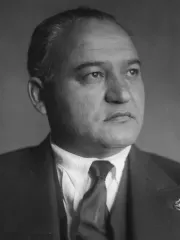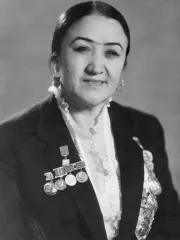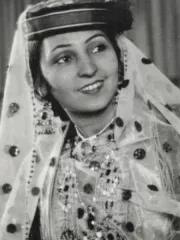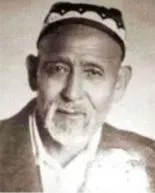
Biography
Usta Olim Komilov was born in 1875 in Margilan into a poor weaver’s family. His parents wanted him to be schooled, but there was no money for it. He lost his father at ten and worked as a day labourer, then went to Samarkand to an uncle who made carts and kept him for more than ten years as an unpaid apprentice. In his spare time he learned to play the doira, the frame drum; back in Margilan he worked as a craftsman, improved his playing and began to teach others. According to the Uzbek Wikipedia, his teacher was one Masaid Ota.
He accompanied Margilan’s yallachi singer-dancers and musicians at weddings and festivals and later in teahouses. After the revolution of 1917 he helped form amateur groups to play at rallies and for Red Army units; by 1920 he worked in music alone, organising music circles in teahouses and a boarding school in his home town. In 1924–1926 he took part in selecting and preparing 26 musicians to teach across the republic.
In 1926 he joined the Uzbek ethnographic troupe led by Muhiddin Qori-Yoqubov, at which the republic’s first dance school was opened and where he taught dance rhythms. From 1929 the troupe became the Uzbek Musical Theatre (from 1939 the Navoi Opera and Ballet Theatre), where he worked as a doira player and adviser on dance. With Tamara Khanum he adapted old dances for the stage and arranged some of them for an ensemble of dancers; he created the dance “Pilla” anew, staged “Paxta” with Mukarrama Turgunbaeva and made the dance “Tantana” himself. He took part in staging the first Uzbek ballets, N. Roslavets’s “Paxta” (1933) and F. Tal’s “Shohida” (1939).
In 1930 he performed at the Olympiad of National Theatres in Moscow, and in 1937 at the Decade of Uzbek Art in Moscow, where he was among the authors of the staged scene “A Festival and a Collective-Farm Wedding”. In 1935 he travelled with Tamara Khanum to the international folk dance festival in London: his doira playing amazed the English audience, and the organisers took a plaster cast of his hand. By some accounts he was handed a personal medal at a reception attended by the British royal family.
He was given the title Hero of Labour in 1932 and became People’s Artist of the Uzbek SSR in 1937; on 31 May 1937 he received the Order of the Red Banner of Labour. His pupils included Tamara Khanum, Mukarrama Turgunbaeva and the doira players T. Inogomov, K. Azimov and A. Tuychiev. The doira rhythms as he played them were written down by I. Akbarov (“Doyra usullari”, 1952), V. Uspensky and Ye. Romanovskaya.
Usta Olim Komilov died in Tashkent on 3 April 1953 and was buried in the Chigatay cemetery. A street each in Tashkent and Margilan and a music school in Fergana bear his name; T. Obidov’s book “Usta Olim Komilov” appeared in 1958.
Career
- Alisher Navoi State Academic Bolshoi TheatreDoira player, dance adviser · Tashkent · 1929–…
Awards
 People's Artist of the Uzbek SSR1937 · Uzbek SSR
 Order of the Red Banner of Labour1937 · USSR
Life path
- 1875Born in Margilan
Born into a poor weaver’s family.
- 1885Orphaned
Lost his father at ten; worked as a day labourer, then for an uncle in Samarkand, learning the doira in his spare time.
- 1920Music only
Helped form amateur groups and set up music circles in teahouses and a boarding school in his home town.
- 1924–1926Training music teachers
Took part in selecting and preparing 26 musicians to teach across the republic.
- 1926Uzbek ethnographic troupe
Joined the troupe led by Muhiddin Qori-Yoqubov and taught at the republic’s first dance school opened beside it.
- 1929Uzbek Musical Theatre
When the troupe became a musical theatre he worked as doira player and dance adviser, and worked on dances with Tamara Khanum.
- 1930Moscow: Olympiad of National Theatres
Performed with the Uzbek delegation.
- 1932Title of Hero of Labour
Awarded the title Hero of Labour.
- 1933Ballet “Paxta”
Took part in staging one of the first Uzbek ballets, and in 1939 the ballet “Shohida”.
- 1935London festival
Accompanied Tamara Khanum’s dance on the doira at the international folk dance festival.
- 1937People’s Artist of the Uzbek SSR
Received the title of People’s Artist and, on 31 May, the Order of the Red Banner of Labour.
- 1953Death
Died in Tashkent on 3 April.
Legacy
The doira rhythms Usta Olim collected and created became the basic manual for Uzbek dancers; many were written down by I. Akbarov, V. Uspensky and Ye. Romanovskaya. His pupils included the dancers Tamara Khanum and M. Turgunbaeva and several generations of doira players, and he is counted among the founders of Uzbek stage dance.
Era: Soviet Uzbekistan, 1920s–1950s- First dance school in the republic opened (1926)
- International folk dance festival in London (1935)
- Collection “Doyra usullari” published (1952)
- T. Obidov’s book “Usta Olim Komilov” (1958)