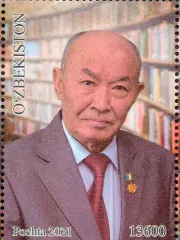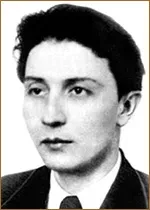
Mutal Burhonov
Uzbek composer whose 1947 anthem of the Uzbek SSR remained the music of the State Anthem of independent Uzbekistan; People's Artist of the Uzbek SSR and author of the opera Alisher Navoi.
Biography
Mutavakkil (Mutal) Burhonov was born in Bukhara on 5 May 1916. His father taught mathematics at a madrasa; his uncles Mazhar and Mukammil Burhonov were prominent Jadid reformers who held posts in the government of the Bukharan People's Soviet Republic, and his sister Fotima was the wife of the writer Abdurauf Fitrat. Fitrat, Cho'lpon and well-known Bukharan musicians were guests in the family home. At eight Mutal was given a tanbur by his uncle Mukammil, who became his first teacher; he later studied the instrument with the celebrated tanbur player Ota G'iyos Abdug'aniyev. By the age of ten he had lost both parents, and his uncles took him to Samarkand.
From 1928 to 1932 he studied at the Uzbek Institute of Music and Choreography, opened in Samarkand. In 1934 he went to Moscow, and a year later he was admitted to the Uzbek opera studio attached to the Moscow Conservatory, where he studied composition with Sergei Vasilenko and conducting with Grigory Stolyarov. In 1936–1937 he interrupted his studies to work as chorus master of the newly founded Uzbek State Philharmonic, preparing its choir for the 1937 festival of Uzbek literature and art in Moscow. After completing the studio course in 1939, he went on to the conservatory's composition faculty.
The purges of 1937–1938 struck his family: his Jadid uncles and a brother perished. When war broke out in 1941, Burhonov volunteered for the Moscow people's militia, and by the end of that year he was back in Tashkent. In 1946 he won the competition for a republican anthem, and in 1947 his music was adopted as the anthem of the Uzbek SSR with words by Turob To'la and Temur Fattoh. He returned to the conservatory after the war and graduated in 1949.
Back in Tashkent, he was artistic director of Uzbek Radio in the early 1950s and chaired the board of the Union of Composers of Uzbekistan from 1955 to 1960. Romances, unaccompanied choruses and vocal-symphonic works are at the centre of his output. His six a cappella choruses on folk tunes (1952) are regarded as among the first examples of Uzbek polyphonic choral writing, and he also arranged Tajik, Karakalpak, Uyghur and Iranian songs for choir. He wrote scores for films such as Avicenna (1956), Enchanted by You (1958) and The Planes Did Not Land (1963), and incidental music for the stage, including the drama Alisher Navoi by Uyg'un and Izzat Sulton. He received the Order of Lenin in 1959, the title of Honoured Art Worker of the Uzbek SSR and the Berdakh State Prize of the Karakalpak ASSR in 1964, the Hamza State Prize of the Uzbek SSR in 1970, and the title of People's Artist of the Uzbek SSR in 1976.
The figure of Alisher Navoi drew him back again and again. In 1968 he wrote a Qasida to Alisher Navoi on verses by Abdulla Aripov for reciter, soloists, choir and orchestra, and in 1979 the romance-poem I Do Not Know Her Name (Namedonam chi nom dorad), a setting of a ghazal by Hafez for voice and orchestra. His opera Alisher Navoi, to a libretto by Izzat Sulton, was completed in 1986 and staged in 1990 at the Alisher Navoi Bolshoi Theatre of Opera and Ballet in Tashkent.
When independent Uzbekistan adopted its State Anthem on 10 December 1992, it kept Burhonov's 1947 melody and gave it new words by Abdulla Aripov. In 1996 the composer wrote the requiem Eternal Memory on verses by Fitrat, Cho'lpon and Usmon Nosir, poets who perished in the purges, together with lines of his own. In the years of independence he was awarded the Shuhrat medal (1994), the Order of Outstanding Merit (1998) and the El-yurt hurmati order (2001), and was made an honorary professor of the State Conservatory of Uzbekistan. In 1997 he moved back to Bukhara, where he spent his last years and wrote a memoir, Ko'ngil xazinasi (Burhonnoma), in 1998. He never married.
Mutal Burhonov died in Bukhara on 15 June 2002, at the age of 86. In 2016 the centenary of his birth was marked across Uzbekistan, and the national agency Uzbekkino made a documentary about him, Mutal Burhonov: I Still Live in Melodies. In 2018 the Bukhara house where he spent his final years opened as the Mutal Burhonov House Museum, a branch of the Bukhara State Architectural and Art Museum-Reserve.
Education
- Uzbek Institute of Music and ChoreographyOther · Samarkand · 1928–1932
- Tchaikovsky Moscow State ConservatoryUniversity · 1935–1949 · Uzbek opera studio (1935–1939), then the composition faculty: composition (Sergei Vasilenko) and conducting (Grigory Stolyarov)
Career
- Uzbek RadioArtistic director · Tashkent
- Uzbek State PhilharmonicChorus master · Tashkent · 1936–1937
- Union of Composers of UzbekistanChairman of the board · Tashkent · 1955–1960Everyone who held this post →
Awards
 Order «For Outstanding Merit»1998 · Uzbekistan
 Order «El-yurt hurmati»2001 · Uzbekistan
 Medal «Shuhrat» (Glory)1994 · Uzbekistan
 People's Artist of the Uzbek SSR1976 · Uzbek SSR
- Honoured Art Worker of the Uzbek SSR1964 · Uzbek SSR
 Hamza State Prize of the Uzbek SSR1970 · Uzbek SSR
 Order of Lenin1959 · USSR
Life path
- 1924First tanbur
At eight he was given a tanbur by his uncle Mukammil Burhonov; he later studied with Ota G'iyos Abdug'aniyev.
- 1928–1932Music institute in Samarkand
Studied at the Uzbek Institute of Music and Choreography.
- 1935–1939Uzbek opera studio in Moscow
Studied composition with Sergei Vasilenko at the studio attached to the Moscow Conservatory.
- 1941Moscow people's militia
Volunteered when the war began and returned to Tashkent at the end of the year.
- 1946–1947Anthem of the Uzbek SSR
His music won the anthem competition and was adopted as the republic's anthem in 1947.
- 1949Conservatory diploma
Graduated from the Moscow Conservatory in composition and conducting.
- 1955–1960Head of the Composers' Union
Chairman of the board of the Union of Composers of Uzbekistan.
- 1964Honoured Art Worker of the Uzbek SSR
Received the title, and the same year the Berdakh State Prize of the Karakalpak ASSR.
- 1976People's Artist of the Uzbek SSR
Received the honorary title.
- 1990Premiere of the opera Alisher Navoi
The opera, completed in 1986, was staged at the Navoi Bolshoi Theatre.
- 1992Anthem of independent Uzbekistan
On 10 December his melody, with words by Abdulla Aripov, was adopted as the State Anthem.
- 2002Death
Died in Bukhara on 15 June.
Works
- “Anthem of the Uzbek SSR” (1947)Anthem
The winning entry of the anthem competition, adopted with words by Turob To'la and Temur Fattoh.
- “State Anthem of the Republic of Uzbekistan” (1992)Anthem
The 1947 melody with new words by Abdulla Aripov became the anthem of the independent state.
- Six unaccompanied choruses (1952)Choral work
A cappella choruses on folk tunes, among the first examples of Uzbek polyphonic choral writing.
- “Avicenna” (1957)Symphonic suite
A suite for symphony orchestra.
- “Qasida to Alisher Navoi” (1968)Vocal-symphonic work
On verses by Abdulla Aripov for reciter, soloists, choir and symphony orchestra.
- “I Do Not Know Her Name” (1979)Romance-poem
A setting of a ghazal by Hafez (Namedonam chi nom dorad) for voice and symphony orchestra.
- “Alisher Navoi” (1986)Opera
Libretto by Izzat Sulton; staged in 1990 at the Navoi Bolshoi Theatre of Opera and Ballet.
- “Eternal Memory” (1996)Requiem
For soloists, choir and orchestra on verses by Fitrat, Cho'lpon, Usmon Nosir and the composer himself.
- “Avicenna” (1956)Film score
A film by Kamil Yarmatov.
- “Enchanted by You” (1958)Film score
The first Uzbek film comedy; music written with Ikrom Akbarov and Manas Leviev.
- “Alisher Navoi”Incidental music
For the drama by Uyg'un and Izzat Sulton at the Hamza Theatre.
Legacy
Burhonov's melody has served as Uzbekistan's anthem since 1947: the republic has had no other anthem music, either in Soviet times or since independence. His unaccompanied choruses stand at the beginning of Uzbek polyphonic choral music, and the figure of Alisher Navoi runs through his work, from stage music of the 1940s to the opera of 1986. His house museum in Bukhara keeps his memory.
Era: The Uzbek school of composition in the 20th century — the Soviet period and the first years of independence- His music adopted as the anthem of the Uzbek SSR (1947)
- His melody kept for the State Anthem of independent Uzbekistan (1992)
- N. S. Yanov-Yanovskaya's monograph on the composer published (1999)
- Centenary of his birth marked; documentary film made (2016)
- Mutal Burhonov House Museum opened in Bukhara (2018)